The big AI models can write code, pass law exams, summarize long documents, and describe a painting in three languages. So surely they can name the font in a screenshot, right?
We tested that assumption. We compared the WhatFontIs font-identification API against GPT-5, GPT-5 mini, Claude Opus, Claude Sonnet, Gemini 2.5 Pro, and Gemini 2.5 Flash on a benchmark of 624 real fonts. The result was not close.
How We Set Up the TestWe built a test set of 624 fonts from three different sources:
- 200+ fonts from Adobe Fonts
- 200+ fonts from Google Fonts
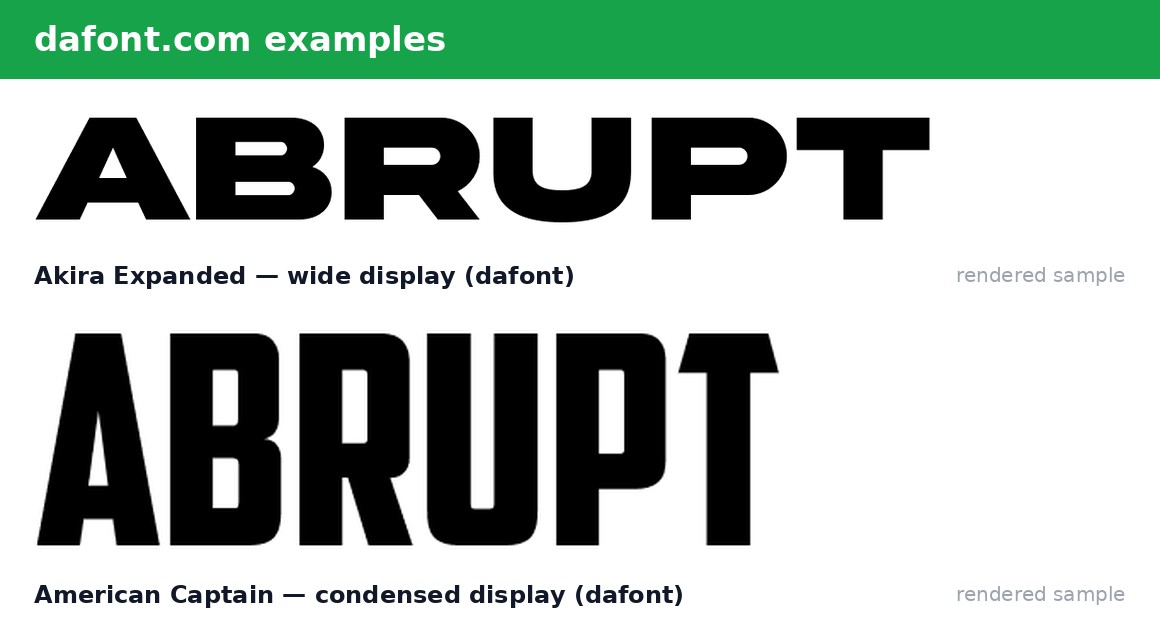
- 200+ fonts from dafont.com
That mix matters. Adobe and Google cover many of the clean, professional fonts designers actually use and license. Dafont adds the harder cases: display fonts, scripts, decorative typefaces, hand-drawn styles, and one-off designs you often see on posters, merch, logos, and social graphics.
Each system got the same job: look at an image of a word or phrase and identify the exact typeface. We graded by exact-name match. “Montserrat” counts. “A geometric sans similar to Montserrat” does not. That is a strict benchmark, but it matches the real-world problem. If a client asks “what font is this?”, a vague style description does not get you to the license, download page, or replacement font.
We measured Top-1 accuracy for all tools. For the WhatFontIs API, we also measured Top-5, Top-10, and Top-20 accuracy, because the API returns a ranked shortlist of real font candidates. The full image set is available on GitHub so anyone can reproduce the test: github.com/whatfontis/Font-Finder.
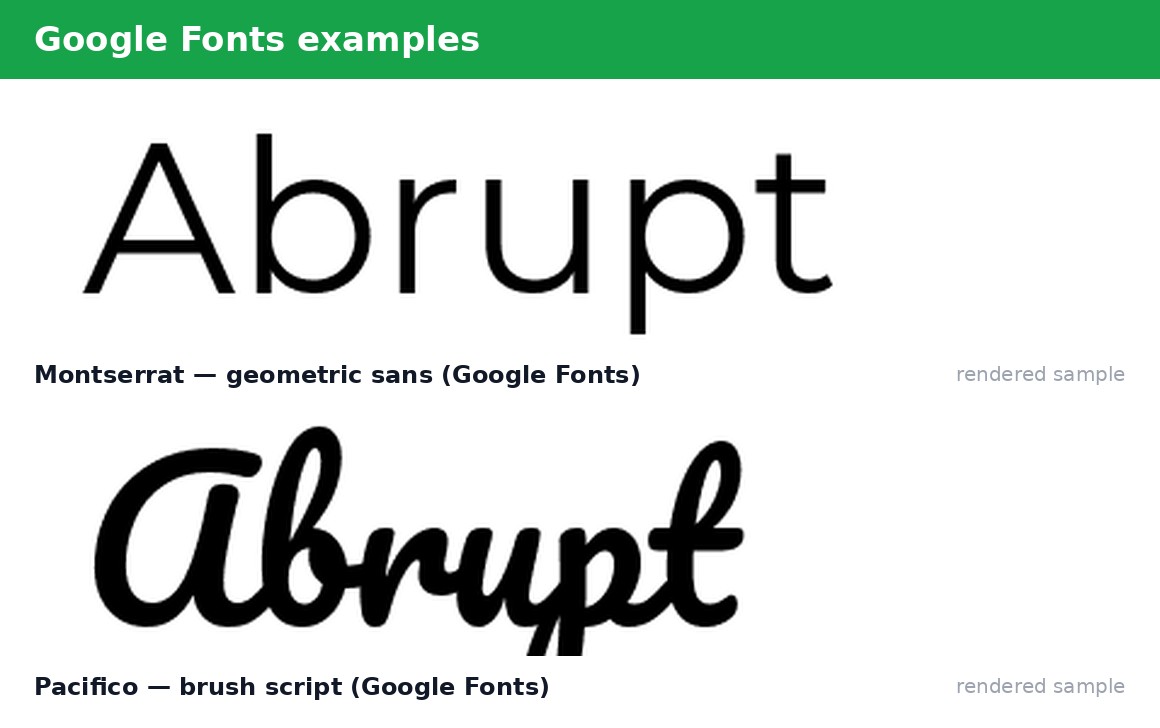
On the full Adobe + Google + dafont benchmark, the WhatFontIs API identified the correct font as its first result 81.4% of the time. Even more importantly, the correct font appeared in the shortlist in most cases:
| Result depth | Correct match rate |
|---|---|
| Top-1 | 81.4% |
| Top-5 | 92.8% |
| Top-10 | 94.5% |
| Top-20 | 96.3% |
That means that for roughly 19 out of every 20 fonts, the correct answer was present in a short ranked list that a designer can scan in seconds. Average response time was about 3.2 seconds per image.
The general-purpose AI models performed very differently. Across GPT-5, GPT-5 mini, Claude Opus, Claude Sonnet, Gemini 2.5 Pro, and Gemini 2.5 Flash, exact Top-1 accuracy was in the 0–1% range. Claude Opus performed best in this group, but still identified only one font correctly.
To be clear, this is our own internal benchmark, and exact-name scoring is intentionally strict. A chatbot may say something useful like “this looks like a bold grotesque, maybe Helvetica or Akzidenz.” That can be a reasonable style description, but it still does not identify the exact font. For font identification, the exact name is the point.
Why General AI Models Struggle With FontsThis is not about whether GPT, Claude, or Gemini are “smart.” They are very capable general-purpose models. The issue is that font identification is not mainly a language problem. It is a visual recognition and retrieval problem.
A chatbot can describe the style of a typeface. It can say whether something looks like a serif, sans-serif, script, geometric font, grotesque, or display face. But when asked for the exact typeface, it often falls back to famous font names it has seen many times: Helvetica, Arial, Futura, Times New Roman, Montserrat, Gotham, or similar common guesses. That may sound convincing, but it is often wrong.
The hard part is not describing the vibe. The hard part is comparing specific glyph shapes, proportions, terminals, curves, spacing, and details against a large catalog of real fonts. That is exactly where a dedicated font-identification engine has an advantage.
What a Dedicated Font Identifier Does DifferentlyThe WhatFontIs API is built specifically for font recognition. It compares the uploaded image against a structured database of more than one million fonts. Instead of producing a single plausible-sounding answer, it returns a ranked list of real font matches. Each result is an actual font candidate that can be checked, licensed, downloaded, or compared visually.
That shortlist is important. Sometimes the first result is not perfect. But in this benchmark, when the first result missed, the correct font was often still nearby in the ranked list. That is why accuracy climbs from 81.4% at Top-1 to 96.3% at Top-20. For practical work, that difference matters. A designer does not need a chatbot to sound confident. They need a short list of real fonts that can be verified quickly.
Want to try it on your own images? You can test the WhatFontIs font-identification API here: whatfontis.com/API-identify-fonts-from-image.html.
Accuracy was the biggest difference, but speed and cost also favored the dedicated API. The WhatFontIs API answered in about 3.2 seconds per image on average. That was faster than every model we tested except a near-tie with Claude, and much faster than GPT-5 at around 14 seconds or Gemini 2.5 Pro at around 10 seconds.
Cost showed the same pattern. Running premium general AI models at volume is not free. In our test, Claude Opus cost several dollars per thousand identifications. That is difficult to justify if the exact-match accuracy is around 1% or lower.
What This Means for Designers and DevelopersIf you are a designer, print shop, brand team, or developer building a “what font is this?” feature, the takeaway is simple: use the right tool for the job. General AI is excellent for brainstorming, rewriting, explaining visual styles, and generating design ideas. But for exact font identification, it is not reliable today.
When a client sends a logo or screenshot and asks, “What typeface is this?”, a confident wrong answer can waste time and damage trust. A dedicated font finder is built for that specific job: compare the image against real fonts and return a ranked shortlist of matches.
Try the Test YourselfYou do not have to take our word for it. The full 624-image test set is available on GitHub: github.com/whatfontis/Font-Finder. Download it, run the images through your favorite chatbot, and count how many exact font names it gets right. Then run the same images through a dedicated font identifier and compare the results.
The question is simple: would you rather use a tool that sounds confident but gets the exact font right around 1% of the time, or one that puts the correct answer in the shortlist 96% of the time?

I'm a programmer at heart. But in my 20s, I realized there was more to the world of fonts than just Courier.
Driven by endless curiosity, I built a system to explore them.
That project grew into one of the world’s leading font identifier platforms: www.WhatFontIs.com.
By 2024, WhatFontIs is helping nearly one million designers—famous or not—discover the names of the fonts they need.